

Repost: WNBA Schedule Breakdown
Back-to-Backs, Rematches, and Preparing for Early-Season Overreactions

I’m (hopefully) enjoying a relaxing honeymoon in Lake Tahoe by the time this reaches your inbox, so I’m once again re-sharing a past article. I published this one just a few months back, at the start of the WNBA season, but now that we’re seeing these schedule quirks actually play out day-to-day, I figured it was a good time to share a reminder of all the weirdness in the WNBA calendar. There was also the recent announcement that the league will extend again, to a 50-game docket, starting next season, so the schedule is only going to get quirkier.
Not all of my predictions proved accurate (the Dallas Wings have been better than expected, the Seattle Storm worse), but that should serve as a reminder that certain teams are breaking from expectations despite their schedule quirks so far.
If you’re the type of person who likes watching the “previously on” segments before TV shows, check out my post from last season recapping the 2025 WNBA. One of the topics I wrote about was the “head-scratching schedule”:
This year’s schedule was just weird at times. It seemed like every game I tuned into, the announcers brought up the strange stretch one of the teams was in the midst of, often with the coach’s platitude “We can’t use that as an excuse. All the teams have to deal with something similar at one point or another.”
Rest days were down, back-to-backs were up, and matchups were clumped together, leading to, at any given point, overly long breaks between games, rapid back-to-backs, or “baseball series” where two teams faced off multiple times in a short stretch. The Minnesota Lynx were given one of the most annoying schedules in this regard, despite being a preseason favorite to win the whole league.1 They finished as the best team in the regular season anyway, but it was a head-scratching choice by the WNBA.
The 2026 schedule is out, and it appears the league is doubling-down on weirdness.
For starters, the league has scheduled even more “baseball series”, clumping more and more matchups together. About one of every five games will feature two teams who just recently played one another in the three games prior, meaning that just about every night there will be some recent rematch on the slate of games.
Last season the Lynx faced off against the same team twice within four games nine different times, the most in the league. This season, they’ll do it 10 times.
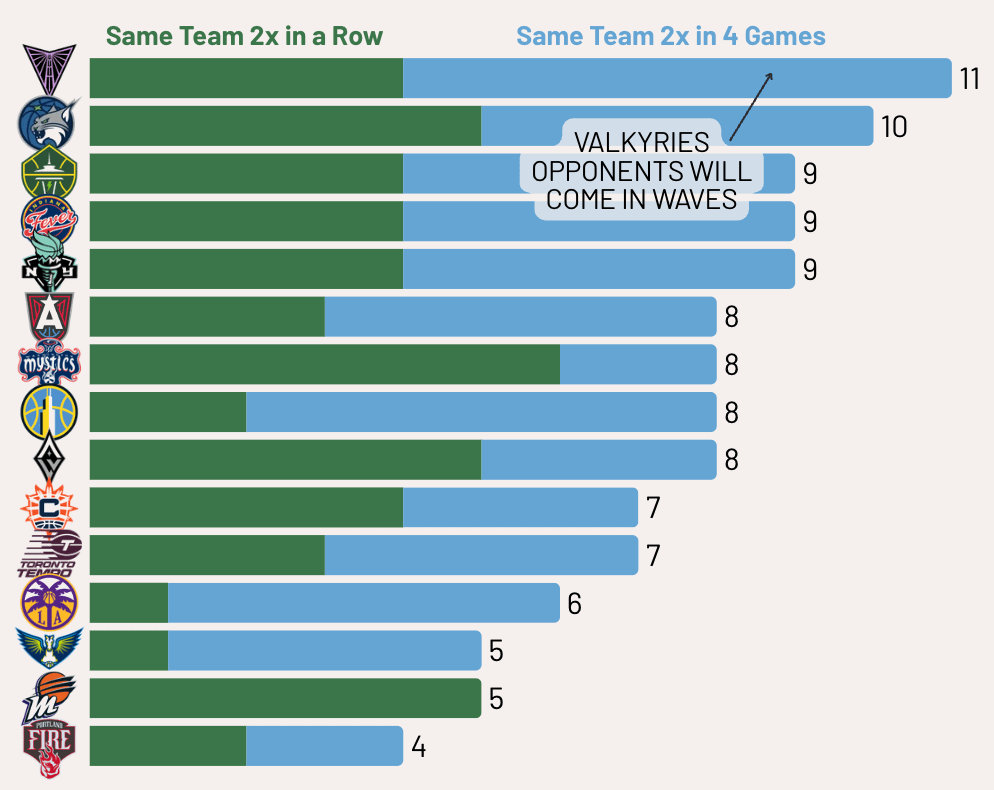
Minnesota’s schedule will include five immediate rematches (playing the same team two times in a row), including one stretch where they play the Liberty, then the Sun twice, then the Liberty again. Perhaps the weirdest stretch, however, will be the Storm from mid-July to mid-August:
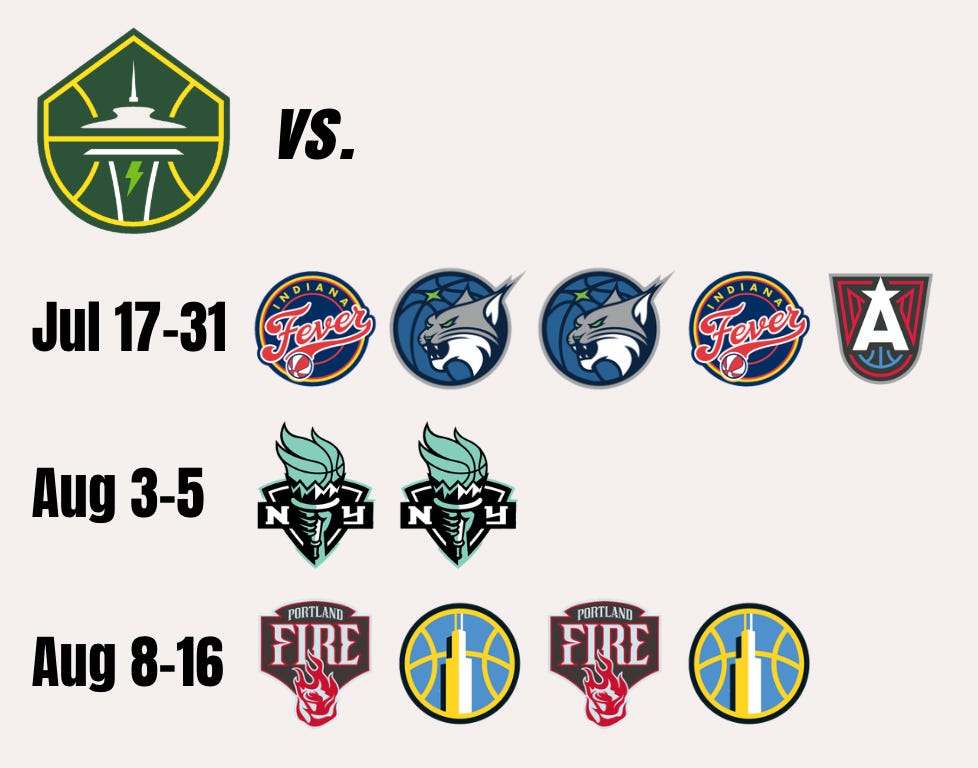
Generally, I (and I would think most fans) prefer matchups be spread out. We like variety throughout the season, and we don’t like having to wait months to see our favorite teams or players square off. Especially if we happen to be busy the one week they do finally meet (if you’re a Storm fan who’s out of town the week of August 10, sorry, you don’t get to see the Sky this season).
Worse, if a player rolls an ankle, twists a wrist, or sustains any other minor injury (and there were lots of injuries last season) that keeps them out even for just a few days, this way of scheduling makes it more likely that they will miss an opponent entirely. Last season, the previous year’s Finalists, the Lynx and Liberty, didn’t play until the end of July, at which point both teams were banged up. As a result, Breanna Stewart and Napheesa Collier still haven’t played against one another in the WNBA since the 2024 Finals.
To their credit, the league does seem to have realized and learned from that specific scheduling mistake, and this year they are featuring the biggest matchups early on. Last year’s Finalists, the Aces and Mercury, play one another in their very first games of the season.2 Opening weekend will also feature the Dallas Wings visiting the Indiana Fever (Paige Bueckers vs Caitlin Clark), the Valkyries at the Storm (Gabby Williams against her former team), and the Aces visiting the Los Angeles Sparks (Kelsey Plum and Dearica Hamby facing their former team).
But still, with the “schedule clumping” we’ll have to wait a while for some of the best matchups; Phee and Stewie still aren’t scheduled to play each other until July!
One thing the league can’t fix, without a major reversal of strategy, is the number of rest days. The schedule remains at 44 games this season, up from 34 just a few seasons ago. The league has crammed more games into essentially the same window of time, resulting in fewer days between games. As Rebecca Lobo pointed out, ideally players would get three or four days off to rest and recover their bodies; instead they’re getting one or two, and sometimes none.
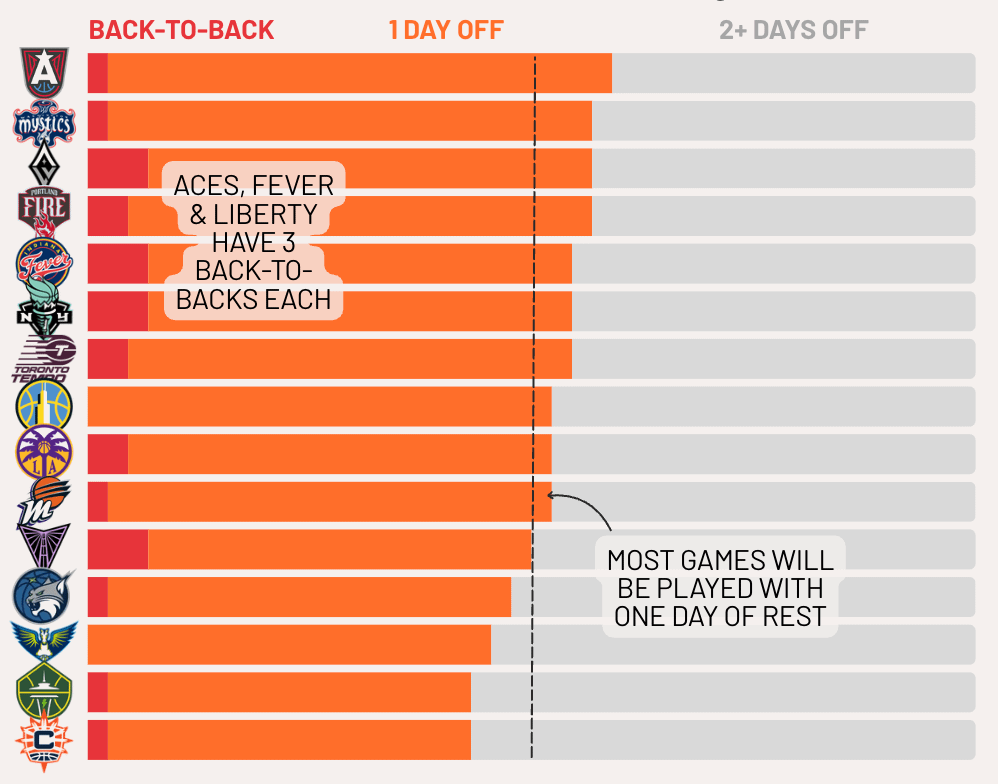
Overall, the average number of days between games will hold steady at just 2.7,3 and half of the games played this season will come with zero or one days of rest. The Storm have it easiest in this regard, playing just 19 of their 44 games with a day or less of rest, while the Dream have to play 26 games with limited recovery time.
But, the league does appear to have been thoughtful about who gets those back-to-backs, and when. Being nestled up in the Pacific Northwest, the Seattle Storm have to fly pretty far to get to most of their opponents’ arenas for away games. All in, their schedule has them flying over 35,000 miles this season, second most in the entire league.
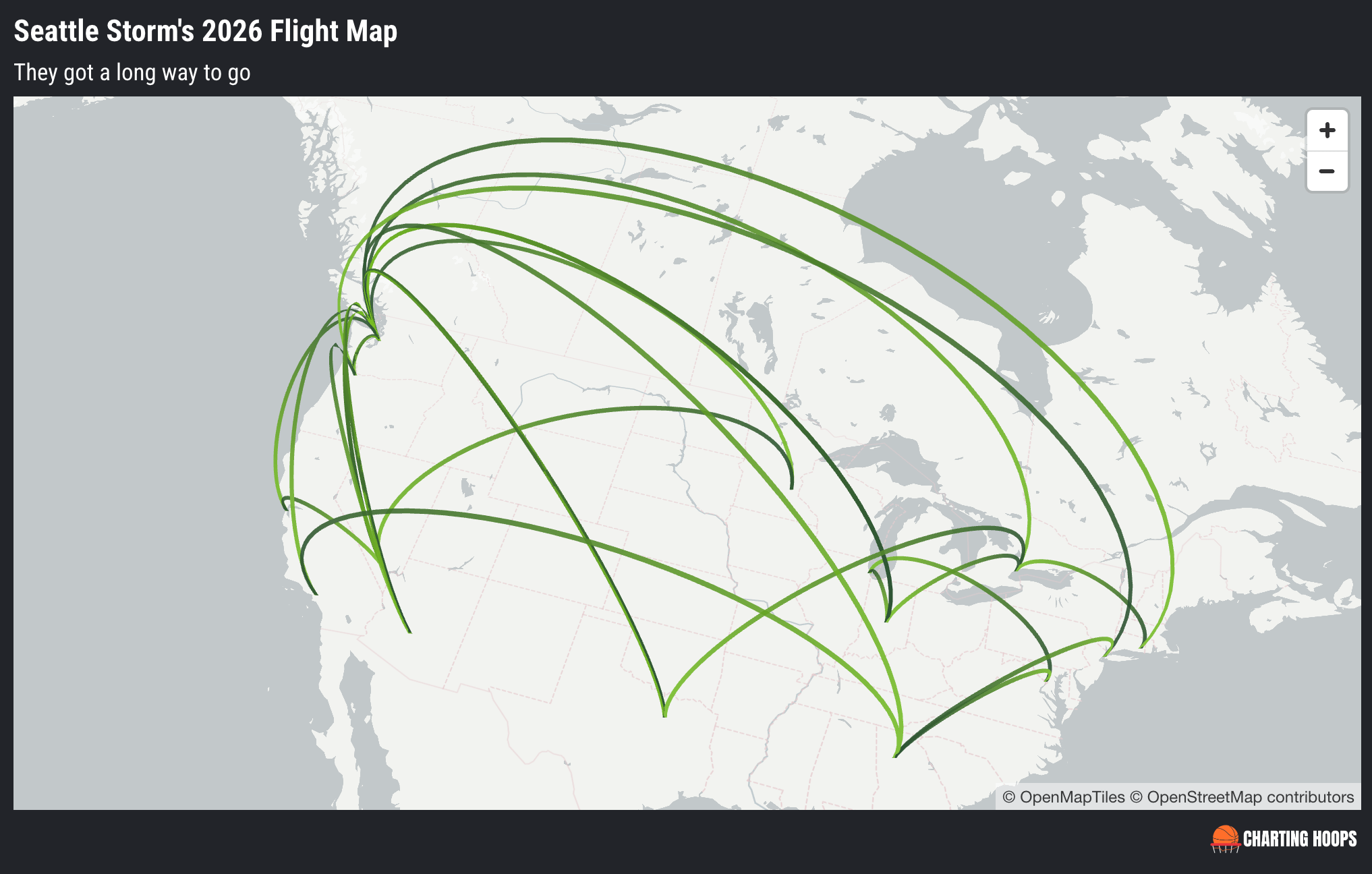
That’s fewer miles than in prior years, before the Storm had neighboring teams in Portland and San Francisco; in 2024 the Storm’s closest opponent was the Las Vegas Aces, 900 miles away. Compare that to Chicago, Atlanta, or Indiana who each have eight opponents within 900 miles. Those more centralized teams are only scheduled to travel between 24,000 and 26,000 miles this season.
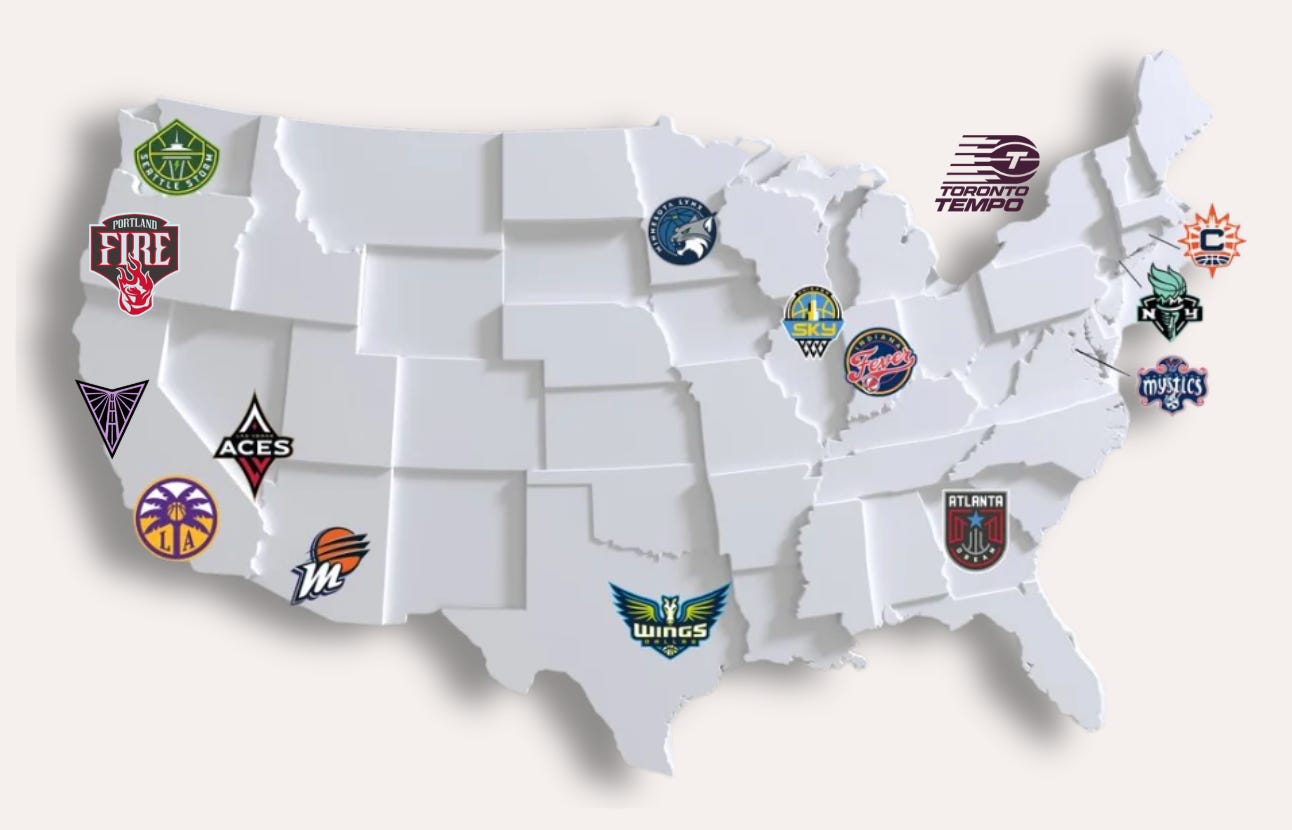
Generally, it appears the league has done a good job balancing rest and travel, giving the teams that fly the farthest more days between games.
Someone still has to have the hardest path though, and once again it appears to be the pre-season favorite. Here’s a summary of the Las Vegas Aces’ schedule:
Rematches: 5 (2nd most of 15 teams in the WNBA)
Baseball Series: 8 (6th)
Back-to-Backs: 3 (1st)
Games on One Day of Rest: 22 (5th)
Miles Flown: 33,000 (5th)
Plus, as the defending champions they will get every team’s best effort every night. They’ll have targets on their backs all season, and millions of eyes on them every night. Especially given that most of their games are in the Thursday and Sunday primetime slots.
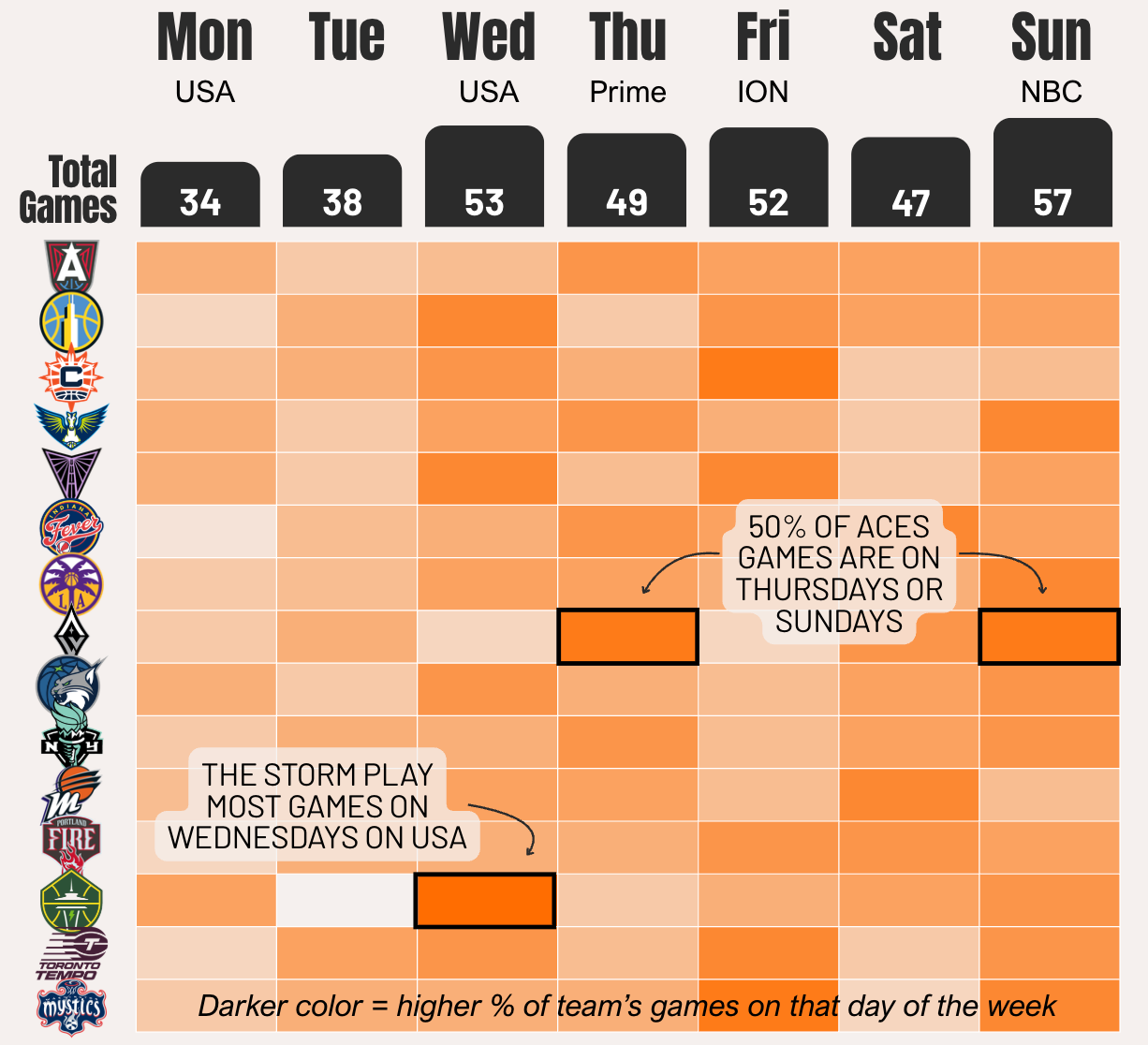
Thankfully for the Aces, the start of their season is relatively easy. After the opening night Finals rematch against the Phoenix Mercury (who, again, they swept) the Aces’ next 10 games include 9 against teams who finished in the bottom half of the league in 2025. A 11-0 start for the Aces is not out of the question, and would be very scary for the rest of the league.
That said, the Liberty and Lynx may be undefeated at that quarter-point mark as well! They have two of the easiest schedules in the league, and these three teams - the Aces, Liberty, and Lynx - don’t play one another until mid-June.
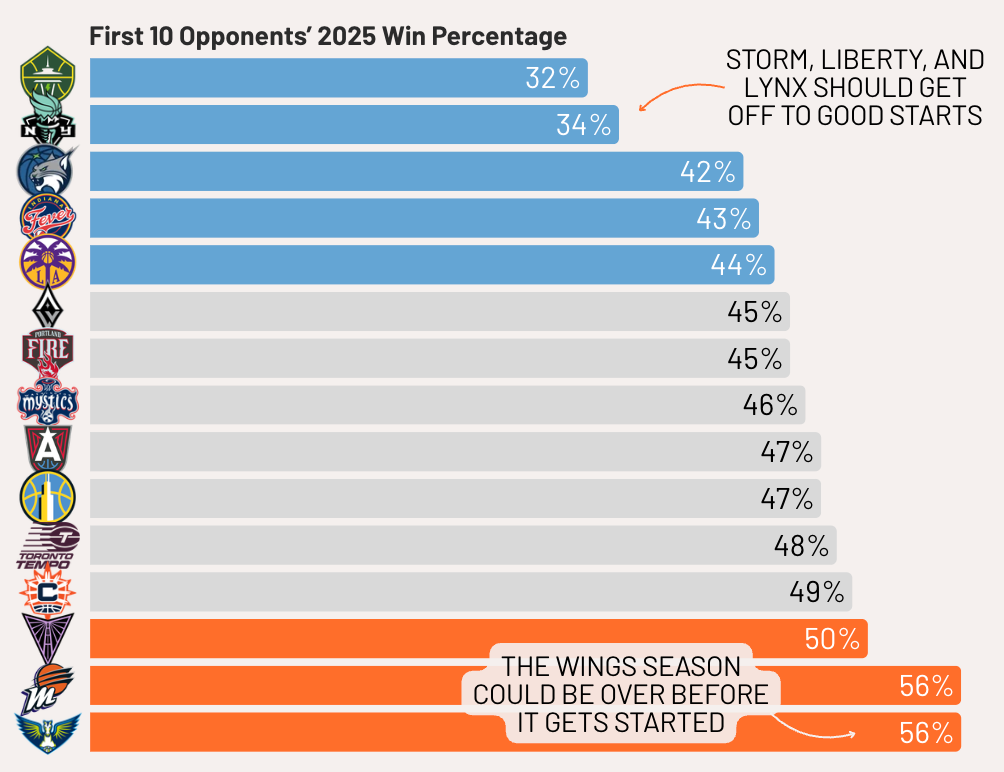
Most expect all three of those teams to finish near the top of the table, so a strong start wouldn’t be all that unexpected. Instead, we’ll probably end up overreacting to the Storm. In their first 10 games they get the Connecticut Sun (11-33 last season) three times, the Mystics (16-28) twice, the expansion Toronto Tempo twice, and the Dallas Wings (10-34) once. Despite losing most of their team in the offseason, Seattle could pretty easily find themselves with 8 wins in their first 10 tries.
On the other hand, as fun as it will be to watch the duo of Paige Bueckers and Azzi Fudd playing together in Dallas for a few games, from a competitive standpoint the Wings’ season may be over before it begins. They open their season in Indiana, then host the Atlanta Dream and Minnesota Lynx, all Playoff teams in 2025. The schedule cools off a bit with games against the Mystics and in Chicago, but both of those teams have wholly revamped their rosters from a season ago and should be much more competitive. Then they have to play the Dream again, then the Liberty, then the Aces. If Dallas comes out of that opening stretch with a record of 2-6, that’d be a win.
Of course, the 2026 rosters for many teams in the W look very different than they did last season. In addition to drafting Azzi Fudd, the Wings swiped the Lynx backcourt of Alanna Smith and Jessica Sheppard. Will these new teammates gel quickly enough to be prepared for the early season gauntlet? Will the Aces be up to the challenge of defending their title despite all of their schedule quirks? Will one of the expansion teams surprise everyone the way Golden State did last season? Will Napheesa Collier continue trying to get Kathy Englebert fired? We’ll find out soon, as the WNBA kicks off for real next Friday, May 8.
You might think the league would give favorites a bit of an easier schedule to help build momentum. In the NBA, for example, the defending champion Oklahoma City Thunder had an incredibly easy start to their season: only 4 of their first 25 games were against teams that would ultimately finish top-six in their conference. They went 24-1 and had sports shows debating if they were the best team of all time.
The league made sure we knew it with the bold headline “Aces Begin Back-to-Back Campaign, Revenge for the Mercury” on their “Key Dates” page.
Excluding the All-Star and FIBA breaks.